
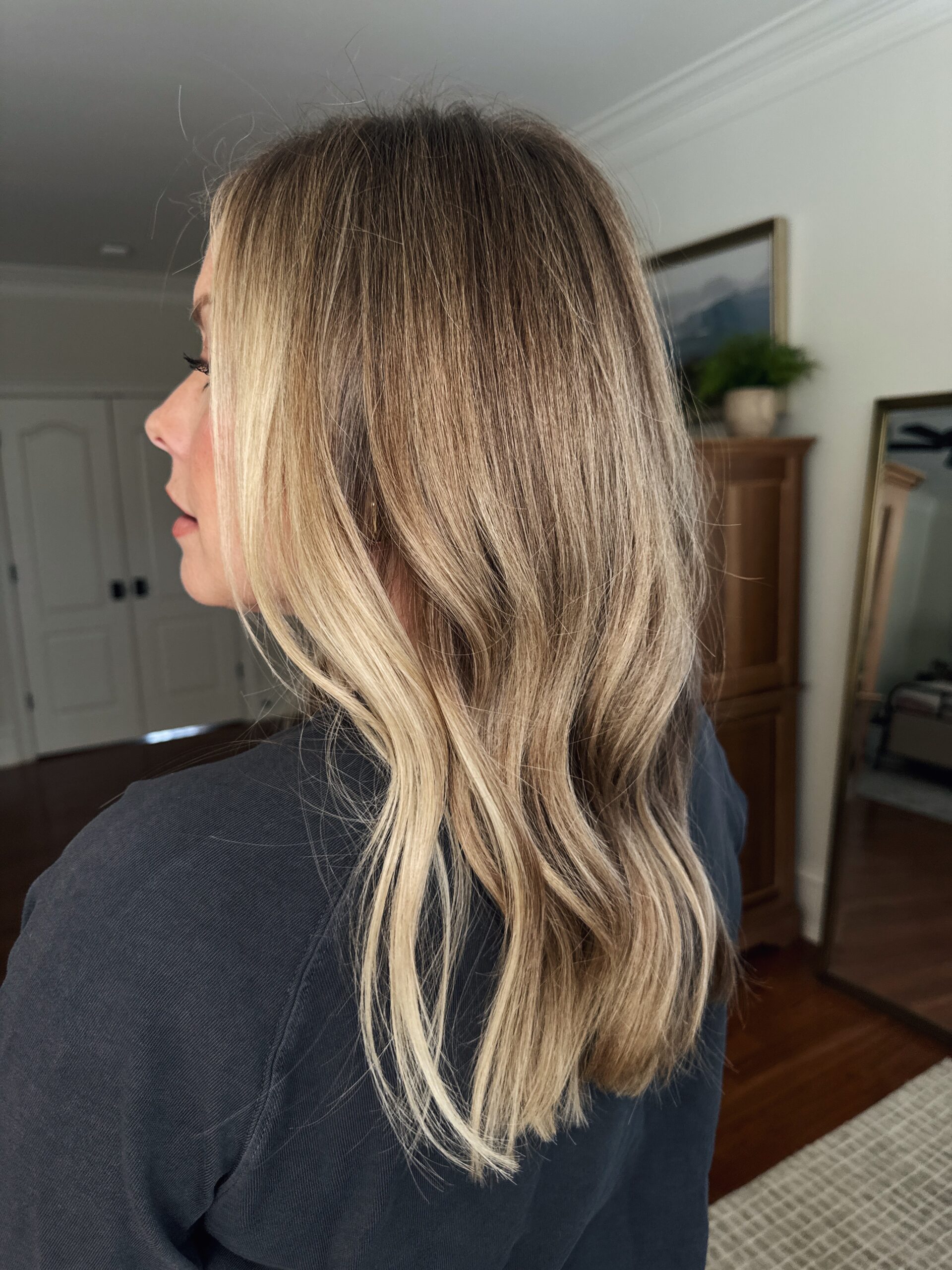
I wrote a post about bond-repairing hair products a few years ago, but it’s time for a quick refresher course on what they do, who needs them, and how to use them.
I’m going to try to explain as best I can what the science of bond repair is and give examples of some great bond repair featured hair products.
There are so many different iterations of how to use a bond repair-based product. You can find it in shampoo, an overnight treatment, or a leave-in product. You can find it in a hair mask; you could use 5 different bond repair products in one single hair washing and styling session.
Is that overkill? Yes.
Is there a “right amount” to use for specific hair problems? Yes!
Let me break down what these products do, who should use them, and how to tell if they’re working.
What is a hair bond, and how can it break?
Bond repair in hair products refers to rebuilding and strengthening the internal structure of the hair. These internal bonds may be broken from heat styling, physical damage (like a clear elastic getting ripped out), or chemical damage (from hair coloring, perms, etc.).
The hair is mainly made of keratin proteins that are held together by several bonds, of which include disulfide bonds, salt bonds, and hydrogen bonds. Some of these are stronger than others.
When these bonds that make up the proteins get broken, it can make the hair feel brittle and can also cause breakage, frizziness, and dullness.
If your hair is experiencing any of those “symptoms”, it’s likely from broken bonds. A bond repair product can help connect/rebuild those bonds, which will, in turn, support the hair’s strength and resilience.
What do bond repair products do or not do?
Bond repair products aren’t designed to make the hair soft, frizz-free, or shiny. They’re designed to get to the source of those issues within the hair caused by the broken bonds.
A lot of times, bond repair products also have ingredients to offer smoothness, softness, and shine to the hair, but it’s important to note that those elements are added in addition to the bond repair focus of the product.
The bond repair “action” takes place under the cuticle (the outside layer) of the hair and deep within the cortex (the inner part). The molecules link up the broken bonds in the cortex in an effort to heal them. There are also proteins and peptides to help fill in the weakened areas within the hair to provide strength and support.
Bond repairing products do not support hair growth, they do not encourage longer hair, they cannot fix split ends, and they often do not offer a great deal of softness to the hair.
So if your hair is damaged from heat styling, coloring, or physical damage, you may certainly benefit from a bond repair treatment!
Do I need a bond repair treatment or a hydrating product instead?
This is the question that is challenging to answer! In general, using a bond repair treatment on the hair will not cause damage. You *can* overdo bond repair treatments, so do pay close attention to the suggested use, but if you’re using one regularly and not getting the softness, smoothness, or frizz reduction that you would hope for, try shifting to a hydrating mask or treatment instead.
Regardless of whether or not it repairs bonds, a treatment supporting the health of the hair will be beneficial! Usually, bond repair treatments tend to be a bit more expensive than other kinds of nourishing hair masks, so if you’re looking for something budget-friendly, try something like this from Dove.
A nourishing hair mask will focus on the outer part of the hair (the cuticle), but may not include the molecules or science to be able to penetrate through to the cortex to offer deeper conditioning benefits. To be completely honest, it’s hard to find masks, leave-in treatments, and more that don’t have an element of bond repair in them. And again–bond repair isn’t the enemy, but some people need it more than others. Amika’s Soulfood Mask is a perfect option for a conditioning, nourishing hair mask that isn’t bond-repair focused.
How can I tell if I’m overdoing my bond repair treatments?
This isn’t as easy as it may seem, but there are some really specific things to look for in your hair.
If your hair starts to feel brittle or stiff (not bouncy), or it’s tangling more than usual, or looking/feeling dry even though you are using bond repair treatments–then you may be overdoing it.
Your hair should feel like it’s getting stronger, have a little bit of bounce or “support,” and be soft and lower in tangles. If you are noticing these improvements while using a bond repair, then you’re doing it right!
How often should I be using a bond repair product?
Generally, someone with lightly damaged hair could use a bond repair treatment about once a month (honestly, if your hair is otherwise in good shape, I wouldn’t really mess with bond repair). If your hair is moderately damaged (aka it’s colored and you also apply heat to it regularly), you can use a bond repair treatment 2-3x a month. If your hair is severely damaged, you can use a bond repair treatment weekly, but do pay close attention to your hair and make sure you aren’t doing a protein overload.
You can alternate a bond repair treatment with a regular nourishing mask, too! That is a safe way to ensure you’re conditioning and caring for the hair without overdoing it!
What is the difference between a bond repair treatment and just using bond repair shampoo and conditioner?
While they both say the same thing, you’re likely to have better results with a bond repair treatment as long as you follow the directions for use. You need to give the product enough time to penetrate the hair shaft in order to start rebuilding the bonds.
This does not mean that bond repair shampoo and conditioner are bad or pointless (I’ve been absolutely loving the L’Oréal EverPure Bond Repair Shampoo and Conditioner right now!). It’s a great support system to help repair the hair, but I would recommend incorporating a treatment into your routine on the regular as well for best results! That said, if your budget doesn’t allow you to try some of the bond repair treatments I recommended above, using the Bond Repair Shampoo and Conditioner is a good alternative.
What bond repair products are the best?
My top 3 bond repair products are K18, Living Proof Triple Bond Complex Leave-in, and L’Oreal Paris EverPure Bond Repair Pre-Shampoo Treatment.
I wrote a blog post about my experience with K18 here!
I know this was a lot of information, but I do think it’s important to know what you’re signing up for when you start to use a bond repair treatment. It can do wonders for the hair when used appropriately! It is not the only way to care for the hair, though, so do take a good look at your own hair, styling routines, and damage level before you dive headfirst into a bond repair routine!
Quick Q&A:
One. My hair is absolutely trashed. What should I use? I would point you toward K18. It’s one of the most advanced bond repair products on the market, and it works fast. In my experience, I liked it most when I followed up with conditioner. The directions tell you to shampoo, squeeze hair as dry as possible, then apply K18, let it sit, and do NOT rinse it out. I found that following that process exactly, but adding a round of conditioner after the K18 has had time to do its job, then rinsing, allowed my hair to be much easier to manage. I would begin by using it 1x a week and assess improvement from there.
Two. My hair is a little damaged from bleaching it, and I have split ends. What should I use? I would try a bond repair shampoo and conditioner a few times a week, and then also make sure you’re using a nourishing hair mask like this one from Dove. You probably don’t need to go too hard on the bond repair products!
Three. My hair never used to be frizzy, but now I have breakage and frizz from my midshaft all the way down to my ends. I color my hair every 8 weeks, blow-dry every day, and use a flat iron. Do you think I need bond repair? In a word? Yes! Bond Repair products will do wonders for you! I’d recommend K18, but if you want something that is also a heat protector, try this one by Living Proof!

comments
Thank you for this! I recently purchased the Dove bond repair mask in a pinch when I couldn’t find the intense repair one, but I love it. I don’t style my hair often, normally a quick dry and messy bun, but it has plenty of years of highlighting. I’ve noticed the bottom 4-6″ are frizzy, dry, unruly, especially when air drying. The bond repair mask helped it feel smooth and lay nicely. I am glad I read this though because I would absolutely overdo it and use too frequently. I will definitely still look for the other Dove masks mentioned so I don’t hurt my hair in the future. Thanks, Kate!
Good plan! It is fine to use as directed but make sure you don’t overdo it!!
Is there anything you recommend for hair breakage along my hairline in the front? After growing out bangs I notice more breakage.
I really love the Virtue Healing Oil!
Thank you for this blog post and explaining bond repair treatment options. I have one question regarding bond repair shampoo and conditioner frequency (such as the Loreal option you mentioned). Is there a specific frequency you recommend using bond repair shampoo/conditioners per week?
I’m using them about every other wash or so and that is working well for me! They could be fine to use every day though!
Would Virtue’s Damage Recovery be an option? Or is this an apples to oranges comparison?
That is a great option as well! I just haven’t used it!
For the K18 and Living Proof, how often do you use them? I noticed Living Proof said weekly so just once a week? Then I noticed K18 mentioned first 4-6 washes then go to maintenance, what would that look like? Is this how you suggest using both?
You certainly don’t need to use both, in case that isn’t clear. I would start using K18 1x a week based on your hairs’ condition and then adjust from there. You can use the Living Proof bond repair leave-in maybe 2-3x a week at the start and then adjust as necessary. It really is trial and error!
My daughter has thick, course hair and we also have well water. We blow dry her hair periodically. Her hair feels dry most days. Would she benefit from bond repair or just stick with hydrating treatments? Thanks!